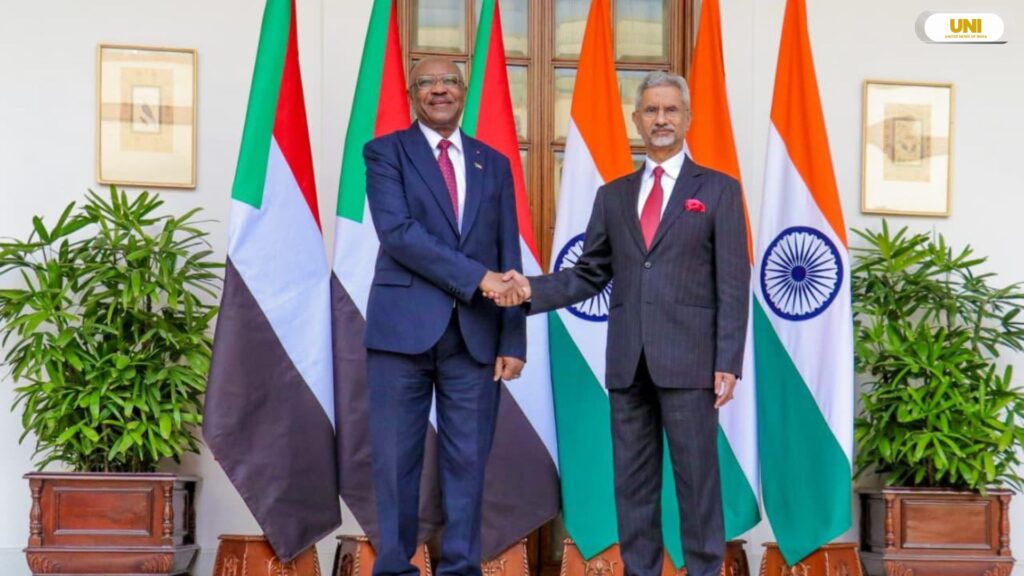
As Sudan emerges from years of conflict, it is pairing reconstruction with diplomacy. India’s growing role in Khartoum’s post-war strategy signals a shift toward long-term, partnership-driven recovery writes Rao Narender Yadav
Emerging from years of devastating conflict, Sudan is recalibrating its diplomatic and economic priorities with reconstruction firmly at the center of its national agenda. As the country confronts the enormous task of rebuilding shattered infrastructure and restoring economic stability, India has emerged as a key partner in Khartoum’s post-war strategy. With its experience in large-scale development, technological capability, and South–South cooperation, India is increasingly viewed by Sudan as a credible and long-term collaborator in national recovery efforts.
Violence in Sudan, which erupted in April 2023 between the Sudanese Armed Forces (SAF) and the Rapid Support Forces (RSF), fuelled by several external players, inflicted widespread damage on infrastructure, institutions, and social cohesion. While the SAF regained control of the capital, Khartoum, in early 2025, the conflict’s legacy remains deeply entrenched. Vast areas of urban infrastructure lie in ruins, essential services are severely disrupted, and demining and rehabilitation efforts remain urgent. United Nations estimates suggest that rebuilding critical infrastructure in Khartoum alone could cost more than $350 million, underscoring the scale and complexity of Sudan’s reconstruction challenge.
Against this backdrop, Sudan’s diplomatic engagement with India has gained momentum. Foreign Minister Mohieldin Salim Ahmed Ibrahim has actively articulated Sudan’s reconstruction vision in New Delhi, emphasizing the need for investment, technical collaboration, and durable partnerships. At a roundtable discussion hosted by the Manohar Parrikar Institute for Defence Studies and Analyses (IDSA), recently, he addressed Indian policymakers, strategic analysts, diplomats, think-tanks outlining Sudan’s post-conflict priorities and highlighting India’s potential role as a long-term partner in rebuilding infrastructure, strengthening institutions, and supporting economic stabilization.
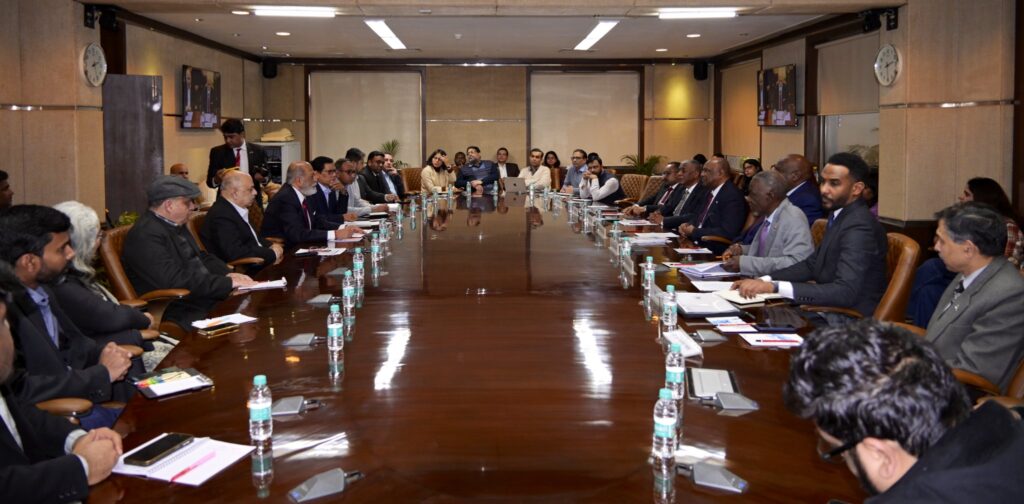
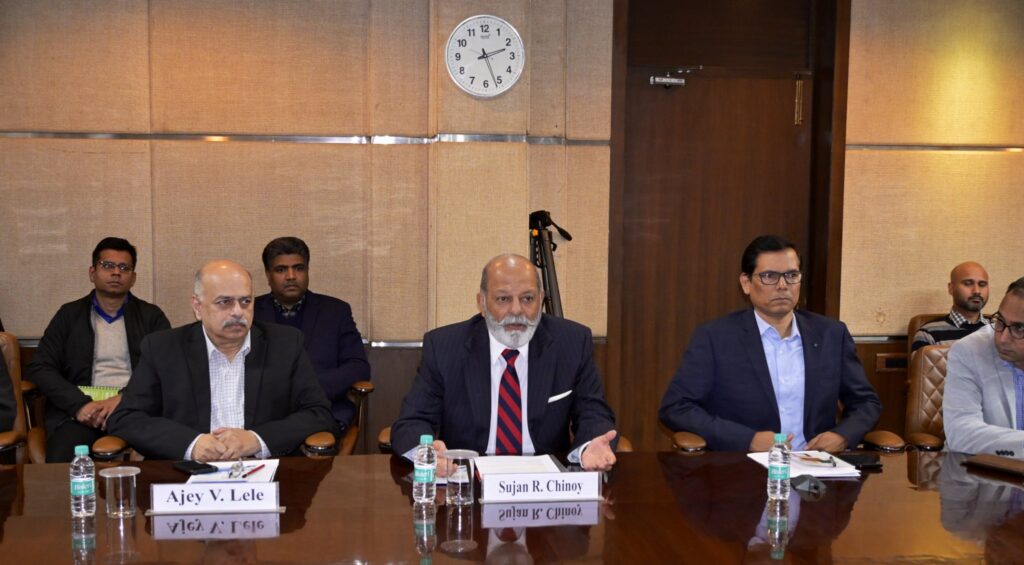
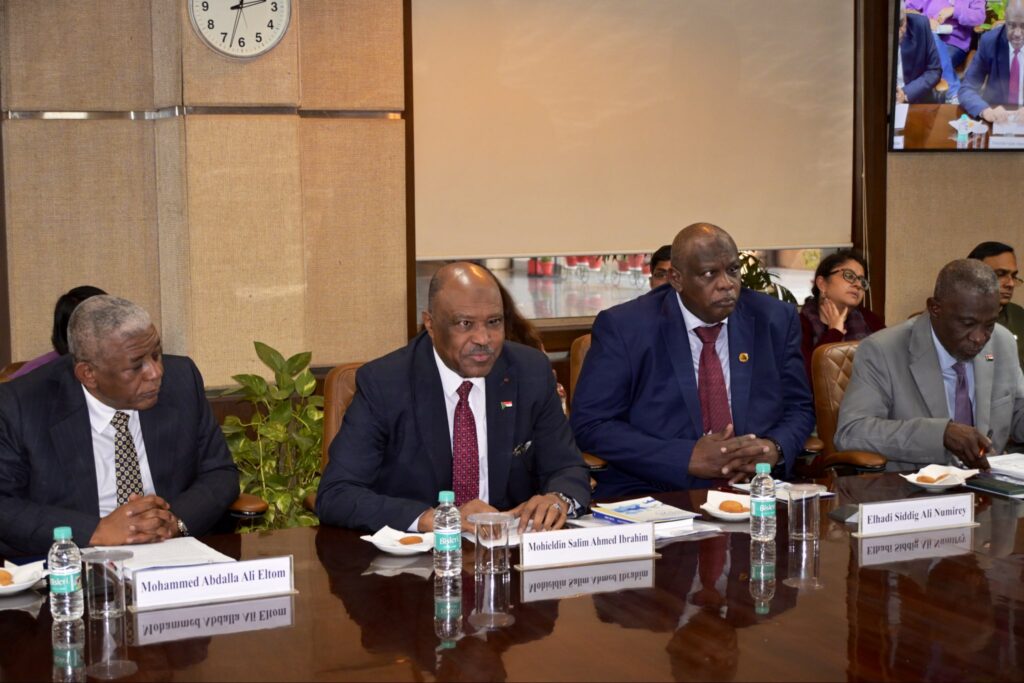
He stressed that Sudan’s outreach to India is rooted not only in immediate reconstruction needs but also in a broader convergence of strategic interests within the Global South. This message was echoed during the India–Arab Foreign Ministers’ Meeting, where Ibrahim pointed to the long-standing bilateral relationship between the two countries as a strong foundation for expanded cooperation. Sudan, he noted, is seeking partnerships that go beyond short-term assistance and instead contribute to sustainable economic recovery.
Importantly, Sudan’s reconstruction strategy extends beyond humanitarian aid. Engagements with Indian officials, including External Affairs Minister S. Jaishankar, and representatives of the Indian private sector have focused on a wide range of sectors. These include rebuilding transport and urban infrastructure, revitalizing agriculture, developing mining and natural resource sectors, strengthening logistics networks—particularly around Red Sea ports—and expanding pharmaceutical and healthcare manufacturing. A defining feature of Sudan’s approach is its emphasis on private sector participation. By encouraging private investment, Sudan hopes to transform bilateral ties from primarily diplomatic engagement into long-term, commercially viable economic partnerships.
Historical ties further strengthen this outreach. India has long been involved in humanitarian assistance, education, and capacity-building initiatives in Sudan and across Africa, consistent with its South–South cooperation framework. These efforts have helped build trust and institutional familiarity, lending credibility to Sudan’s current push for deeper engagement. “I had studied at the University of Khartoum and most of my teachers were Indian,” shared Ibrahim.
From India’s perspective, Sudan offers strategic and economic opportunities, particularly in the energy and oil sectors that have been severely affected by conflict. Indian expertise in infrastructure rehabilitation, energy development, and industrial capacity-building aligns with Sudan’s immediate reconstruction needs and longer-term development ambitions. If this engagement matures as envisioned, Sudan’s outreach to India may offer a compelling model of post-conflict reconstruction anchored in pragmatic geopolitics and development partnership.