The BRICS Summit Has Strengthened India’s Strategic Engagement with Africa. The Next Step Is Building a Stronger Human, Economic and Institutional Connect

Something is shifting in how India and Africa relate to each other. For decades, it was anchored in shared history, political solidarity and government-to-government diplomacy. That foundation still matters. But the world it was built for is changing fast, and if this partnership is going to mean as much in twenty years as it does today, it can’t run on diplomatic goodwill alone. It needs something more deeper: people connecting with people, businesses with businesses, universities with universities, and societies with societies.
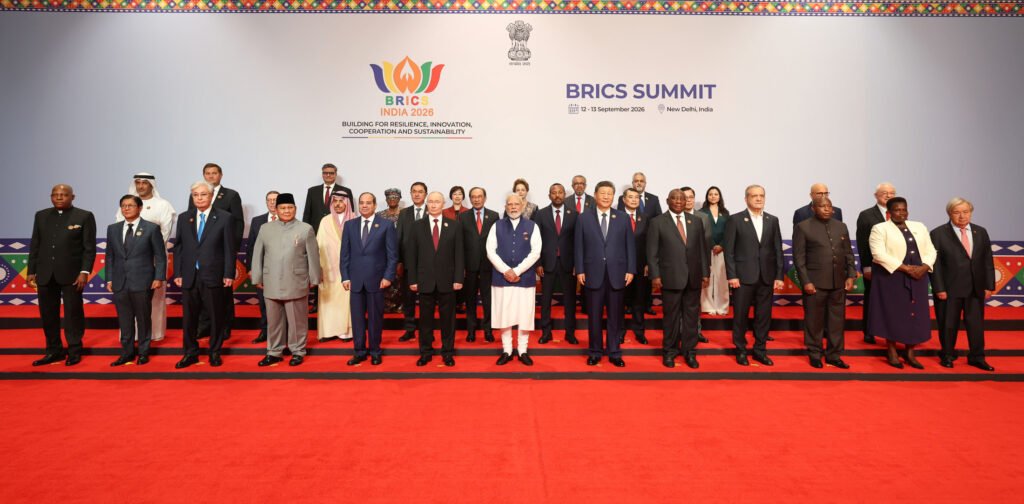
It came out quite pertinently during the just-concluded BRICS Summit, which has once again placed the Global South at the centre of international attention, and Africa firmly within that conversation. It has further reinforced that if the BRICS momentum is to have a lasting impact on India–Africa relations, the next phase of relations must move from leaders to people, from agreements to partnerships, and from diplomacy to everyday economic and social connections.
That, in many ways, is the quieter signature of Prime Minister Narendra Modi’s foreign policy. A consistent instinct to ask who, exactly, is being connected. Over the last decade, this has shown up again and again. Governments sign the agreements. But it’s people who decide whether those agreements ever become real. Nowhere is that truer than in India’s relationship with Africa, a relationship that has always had more room to grow than the official calendar of visits and statements would suggest. The moment is right for this shift.
The revival of the India–Africa Forum Summit after a long gap provides another important opportunity. Combined with the momentum generated by India’s BRICS presidency, it creates space for New Delhi to think beyond summit diplomacy and build a wider ecosystem of India–Africa engagement.
Africa, meanwhile, is impossible to ignore. It has a young population, fast-growing markets, and a rising voice in global affairs. India, for its part, has plenty to offer in return. Pharmaceuticals, digital public infrastructure, fintech, agriculture, renewable energy, a manufacturing base that’s only getting more sophisticated. Trade between the two already touched roughly $93.69 billion in 2025–26. It’s impressive but it’s also still a fraction of what’s possible.
The next phase would involve moving past transactions and into relationships past government-led initiatives and into something closer to an ecosystem. Governments aren’t going anywhere, of course. They’ll keep negotiating the deals, and opening the doors for investment. But it’s businesses that create real economic interdependence. It’s universities that build intellectual bridges. It’s students, entrepreneurs, and communities that make a relationship feel personal rather than official. Young Indians and young Africans need reasons of their own to feel connected. They need more student exchanges, more academic collaboration, professional networks, cultural exchange, and tourism. Give young people a lived reason to see each other as partners, and the relationship stops being something inherited and starts being something chosen.
Business has a similar story to tell. India shouldn’t be looking at Africa as a market to sell into. It’s a partner in manufacturing, in innovation, in building things together. Indian companies can go deeper including real local partnerships, investment in African production capacity, genuine participation in regional value chains rather than one-way trade. African businesses have plenty to bring to that table too. Access to India’s technology base, its entrepreneurial energy, its capital, its enormous consumer market. Done right, this kind of business-to-business relationship becomes one of the sturdiest pillars diplomacy can have.
BRICS gave this a natural stage. With South Africa, Egypt and Ethiopia now part of the grouping, African perspectives are increasingly embedded within debates on trade, development finance, technology, food security, health, climate and global governance. India’s 2026 BRICS presidency has reinforced that direction, but the real test begins after the summit. BRICS cannot measure its success simply through declarations and diplomatic optics. Its credibility will increasingly depend on whether it can translate political convergence into practical connections – between businesses, researchers, entrepreneurs, universities and young people across member countries.
India’s relationship with South Africa is a useful test case. Both countries agree on plenty when it comes to reforming global institutions and giving the Global South a stronger seat at the table. But that kind of political alignment only goes so far unless it’s backed by economic and social ties alongside the university exchanges and professional networks that keep a relationship alive even when government priorities shift. There’s a broader lesson buried in all of this, too.
India’s engagement with Africa can’t be framed as one side arriving with solutions and the other simply receiving them. Africa brings its own entrepreneurial energy, its own resources, its own ideas. India brings decades of experience building things that are affordable and scale well. The real opportunity sits at the intersection of the two.
Ultimately, diplomacy runs on trust – and trust cannot be built by governments alone. High-level visits, summits and agreements create momentum, but it is people who give that momentum a life beyond the diplomatic calendar. That is why India and Africa must look beyond the next summit – and beyond BRICS itself. The real measure of the relationship will be what happens after the leaders return home: whether businesses invest together, universities collaborate, young people build networks, cultures interact and communities discover new possibilities in one another.
After all, governments can open the doors. But it’s people who keep them open for years, and hopefully for generations.
(Author is Co-Founder of Public Relations & Advocacy Group)